
Apparel Sourcing Problems and Execution Use Cases
MINYOO is not just another supplier.
MINYOO helps brands solve apparel sourcing problems by structuring sourcing, development, and production into one coordinated execution system.
We step in where execution breaks down — across materials, development, and production.
These are typical scenarios where brands lose control — and where structured execution makes the difference.

Which Situation Matches Your Current Setup?
- You source fabrics in one country while producing in another
- You work with multiple suppliers across regions
- Sampling and bulk production are not aligned
- You experience recurring garment production issues or delays
- Your team spends more time reacting than executing
In most cases, the issue is not sourcing — but how production is managed.
USE CASE 01
A US Brand Sourcing Fabric in China and Producing in Vietnam
A US growing brand sources fabrics in China while producing garments in Vietnam.
This setup often leads to apparel sourcing problems when materials, timelines, and factory execution are not aligned.
🔴 Where It Breaks
- Fabric readiness does not match production schedule
- Mills and factories operate on separate timelines
- Delays in sampling lead to rushed or unstable bulk production
- Communication gaps slow down decisions
🔵 What We Actually Do
- Align fabric sourcing timelines with factory production plans
- Control sampling flow between mill and garment factory
- Coordinate specifications, approvals, and material readiness
- Keep all parties working under one execution timeline
🟢 Outcome
- Fewer sampling rounds and better handover into production.
- Production delays minimized at handover stage
- Clear visibility across fabric and garment stages
- More predictable delivery timelines
USE CASE 02
Multi-Supplier Production Without Central Control
A buying team works with multiple fabric mills and factories across regions.
Without a central system, garment production management becomes disorganized, leading to inconsistent materials, delays, and communication gaps.
🔴 Where It Breaks
- Fabric decisions are made before factory alignment
- Inconsistent understanding between fabric and garment suppliers
- Each supplier works independently without shared timelines
- Issues are discovered too late — during production
🔵 What We Actually Do
- Define material standards before sourcing begins
- Align all suppliers under one execution structure
- Synchronize timelines across fabric, development, and production
- Monitor risks early — not after delays happen
🟢 Outcome
- Fewer material mismatches during production
- Reduced back-and-forth between suppliers
- Faster decision-making across teams
- Lower execution risk across the supply chain

USE CASE 03
Cross-Border Coordination Under Tight Timelines
A brand manages development and production across multiple countries under time pressure.
Without strong apparel production coordination, delays and misalignment across regions become unavoidable.
🔴 Where It Breaks
- Development and production overlap without clear control
- Time zone and communication delays slow execution
- Limited visibility across suppliers and regions
- Problems escalate before they are noticed
🔵 What We Actually Do
- Build a structured timeline across all regions
- Control checkpoints across development and production
- Maintain real-time visibility on materials and progress
- Act as the central execution layer across all suppliers
🟢 Outcome
- Shorter decision cycles during production
- Fewer last-minute disruptions
- Better control across multiple countries
- Stable execution under tight timelines


Why These Projects Are Manageable with MINYOO
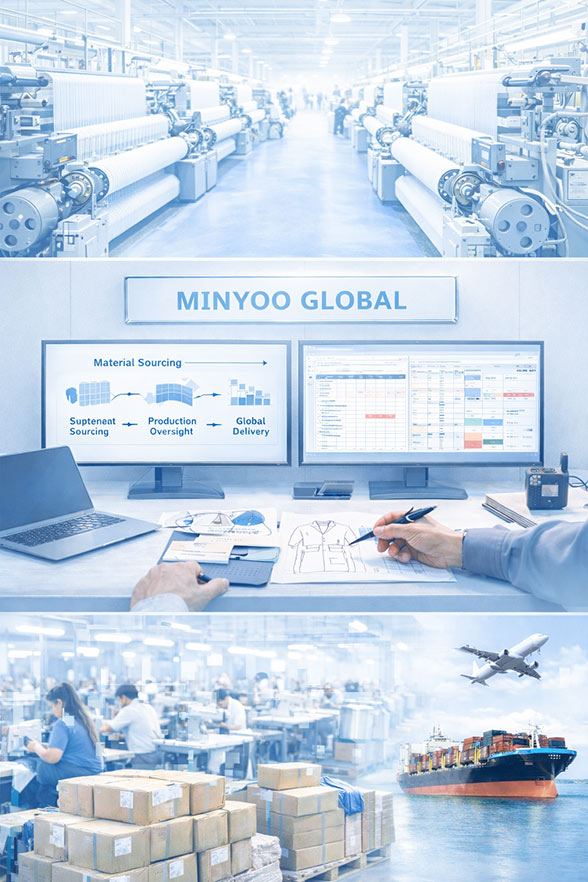
These use cases show how MINYOO applies apparel sourcing solutions to solve execution problems across sourcing and production.
We introduce control where systems don’t exist:
- One execution system across materials and production
- Full visibility from development to delivery
- Controlled timelines across regions
- Fewer surprises during production
Not Every Supply Chain Fits This Model
If your sourcing is simple, centralized, or price-driven — this model may not be necessary.
But if you are managing:
- Multiple countries
- Multiple suppliers
- Tight timelines
Then execution — not sourcing — becomes your real problem.
Need More Control Across Sourcing and Production?
If you’re facing apparel sourcing problems or ongoing garment production issues, we can help you structure a more reliable system.
Send us your current setup — tech pack, supplier structure, or project plan.
We’ll show you where execution breaks — and how to fix it.