How Apparel Sourcing Works: Step-by-Step Supply Chain Guide
Understanding how apparel sourcing works is critical for any fashion brand looking to build a reliable, efficient, and profitable supply chain. While the process can seem complex, it follows a structured workflow that spans from initial design concepts to finished goods arriving at your warehouse.
This step-by-step guide walks you through the complete apparel sourcing process and explains how each stage connects to ensure successful production.
Design and Product Development
The apparel sourcing process begins long before materials are ordered. It starts with design intent and product development.
- Market Research & Trend Analysis: Brands identify consumer trends, color palettes, and style directions.
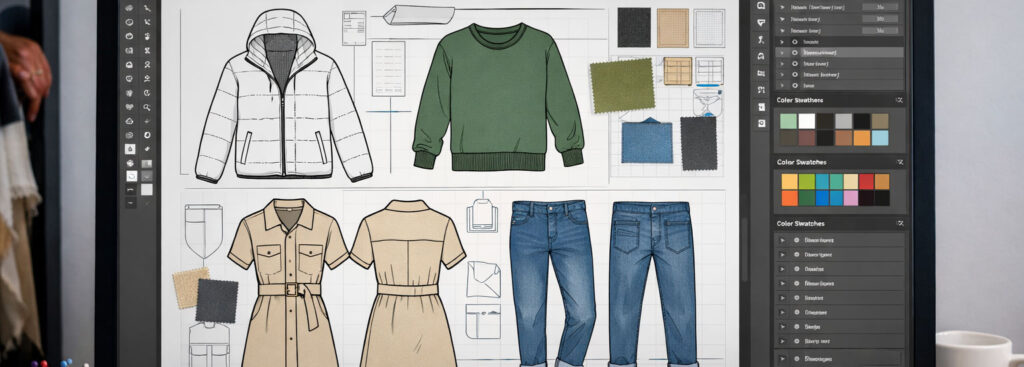
- Design Creation: Technical designers create sketches, tech packs, and CAD drawings defining construction, materials, and fit.
- Sourcing Strategy: Based on the design, the sourcing team outlines which fabrics, trims, and manufacturers are best suited for the product.
At this stage, a buying office can support brand teams by interpreting design requirements and matching them to feasible material options across global suppliers.
Fabric Sourcing
Fabrics are the foundation of any garment, and fabric sourcing often determines the quality, cost, and sustainability of the final product.
- Identify Fabric Options: Sourcing teams evaluate available fabrics (knits, wovens, denims, specialized materials) based on design, budget, and region.
- Sample Evaluation: Factories or suppliers provide fabric swatches. Brands test for hand feel, durability, color fastness, and compliance.
- Cost & Lead Time Negotiation: Once a fabric is selected, terms are confirmed including cost, minimum order quantities (MOQ), and delivery time to the factory.
For global brands, this stage often requires coordinating across multiple countries, making an apparel supply chain coordination partner essential for efficiency.
Manufacturer Selection
Selecting the right manufacturer is one of the most critical steps in the apparel sourcing process. A poor choice can lead to quality issues, delays, or cost overruns.
- Factory Evaluation: Based on product type, brands evaluate factories based on capabilities, capacity, quality systems, and compliance history.
- Communication & Sampling: Brands or agents share tech packs and request samples to verify fit and construction.
- Pricing & Contract Terms: Final prices, payment terms, lead times, and quality standards are confirmed in writing.
Your role as a brand is to ensure the factory’s capabilities align with your product needs—a task where an apparel buying office adds significant value through established factory relationships.
Production Management
Once samples are approved and orders booked, production management begins.
- Pre-Production Planning: Factories prepare cut plans, material requirements, and production schedules.
- Cutting & Sewing: Fabric is cut and then sewn in assembly lines.
- Washing & Finishing: Garments undergo washing, ironing, and finishing to meet quality standards.
- Quality Checks: Inline inspections ensure production stays on track and meets defined quality benchmarks.
This stage requires close coordination across design, sourcing, and manufacturing—a challenge that a centralized execution partner can manage seamlessly.
Quality Control and Delivery
Quality control (QC) is the final safeguard before goods leave the production region. Delivery coordination ensures finished garments reach your market on time.
- Final Inspection: Quality teams conduct pre-shipment inspections (PSI) to check for defects, sizing consistency, and color accuracy.
- Testing & Compliance: Where required, factories provide test reports covering safety, durability, and regulatory compliance.
- Logistics Coordination: Once approved, garments are packed, shipped, and tracked to their destination.
- Documentation: Invoices, packing lists, and certificates are prepared for customs and delivery.
A strong apparel sourcing process ends with predictable delivery and consistent quality—two outcomes that MINYOO’s end-to-end execution model delivers.
Conclusion
How apparel sourcing works depends on a well-orchestrated sequence of design, sourcing, production, and delivery steps. Each stage impacts cost, quality, and speed to market.
By following this step-by-step guide, fashion brands can build a transparent, efficient, and low-risk supply chain. At MINYOO, we specialize in managing every stage of the apparel sourcing process so you can focus on design, marketing, and growing your brand.
Whether you need support with fabric sourcing, factory selection, production management, or QC, our team is ready to streamline your workflow and improve your bottom line.